
25 Years Later: Remembering September 11
Written by Grace Olinkiewicz
Remembering Where We Were
I wasn’t born yet when the September 11th terrorist attacks took place. But early in my life, I came to understand the event and its impact on the world while in elementary school.
Every year on September 11th, my school would have a moment of silence for each event that took place that day, beginning with the hijacking of the planes and ending with an extended moment of silence for the victims, survivors, and their families.
Each teacher would take time out of class to speak about their experiences on September 11th and give students a chance to ask questions. For me, the emotions of the attack didn’t fully hit until music class.
My teacher played us music by artists who experienced 9/11 to help us grasp the different emotions that came out of the tragedy. Two songs impacted me the most: Where Were You (When the World Stopped Turning) by Alan Jackson and Courtesy of the Red, White, and Blue by Toby Keith.
How September 11 Shaped a Generation
In the years following the September 11th attacks, the world underwent a transformation.
The Homeland Security Act of 2002 created the Department of Homeland Security, a cabinet department responsible for areas including preventing terrorist attacks, border security, immigration and customs, and disaster response. The Transportation Security Administration (TSA) was formed in November 2001, forever changing airport security and the way Americans traveled.
September 11th triggered outrage and tremendous sadness among the American people and around the world. For some, it also created a determination to serve their country.
In interviews conducted by journalists, many veterans who fought in Iraq and Afghanistan have credited the 9/11 terrorist attacks as part of their motivation for joining the military.
“Yes. Had to stand up and be counted. I felt the need to do my part.”
— Maxwell Angwenyi“A co-worker of mine died on Flight 77. I joined up immediately after 9/11, primarily because I then saw that my nation and my family were threatened […]”
— Anonymous Veteran
The American military underwent significant change following the attacks. In the year after, nearly 255,000 Americans joined the active and reserve forces. Military service became part of the lives of so many families, including people my own family knew.
What 9/11 Remembrance Means 25 Years Later
Remembrance matters because it keeps the memories of those we have lost alive. Even 25 years later, we continue to remember the victims, survivors, fallen service members, and the families whose lives were forever changed.
There are so many ways we can honor those who lost their lives and those who served in the years that followed.
Take, for example, Staff Sgt. Jose Luis Sanchez. Sanchez lost the bottom portion of his leg after stepping on an IED in Afghanistan. He honors his fallen brothers and sisters by carrying the American flag while running marathons. One of his most notable races was the 2017 Boston Marathon, where he carried the flag for the entire 26.2-mile race and finished in just under six hours.
Another example hits close to home for me: Army 1st Lt. Joseph J. Theinert.
I was in grade school when he passed; he was my math teacher’s brother. Army 1st Lt. Joseph J. Theinert died on June 4, 2010, while serving during Operation Enduring Freedom after commanding his unit to retreat while he worked to disable a bomb.
His family wanted to continue his legacy and created the Strongpoint Theinert Ranch, a restorative program for veterans that promotes health and wellness through outdoor experiences in New Mexico.
Military service can also be honored through the little things. 9/11 remembrance doesn’t have to involve a large gesture.
You can:
 Place flags on the graves of fallen service members.
- Donate to organizations serving veterans, service members, and military families.
- Sit down with a veteran and listen to their story.
- Ask family members what they remember about September 11th.
- Share stories of service and sacrifice with younger generations.
- Find a local opportunity to volunteer in honor of those who served.
Whether you’re a military spouse, sibling, parent, or not part of the military community at all, you can help keep the memories of those we’ve lost alive.
Remembrance comes from the heart.
Helping the Next Generation Understand
There isn’t an exact number of how many children have been born into military families since September 11th, but estimates show that millions of children have grown up connected to military life during the past 25 years.
With a new generation growing up without their own memories of that day, helping them understand 9/11, remembrance, and military service has become even more important.
Talking about September 11th remains difficult for some, so how do you explain it to future generations?
The official 9/11 Memorial & Museum provides a guide for discussing the attacks with children in a way they can understand. It emphasizes listening and accepting that, as a parent, you won’t have all the answers. You can educate your child with facts while also sharing a message of hope.
I feel one of the best ways to educate future generations about September 11th is to pass down stories of service, sacrifice, courage, and community.
I learned so much from stories told to me by people who served or were there on 9/11. My high school basketball coach served in the Marine Corps in Afghanistan after 9/11, and from him I learned how resilient people can be even in the darkest moments.
An old friend of my mother was there on September 11th. She worked in the towers but forgot to set her alarm the night before. When she arrived at the towers the next morning, the first plane hit. Her office was on the 80th floor.
Stories like these gave an event that happened before I was born a human connection I could understand.
Educate through stories and facts. Listen and accept that you won’t have all the answers. Do the best you can to memorialize the fallen, and don’t be afraid to show your kids how deeply the attacks affected you, your family, and our country.
Carrying Their Stories Forward
I hope that in another 25 years, Americans are still carrying forward the stories of the fallen, survivors, veterans, and military families whose lives were shaped by September 11th and everything that followed.
Supporting today’s troops and military families is another way we can honor the legacy of those who served before us. Behind every service member is a family with a mission of its own.
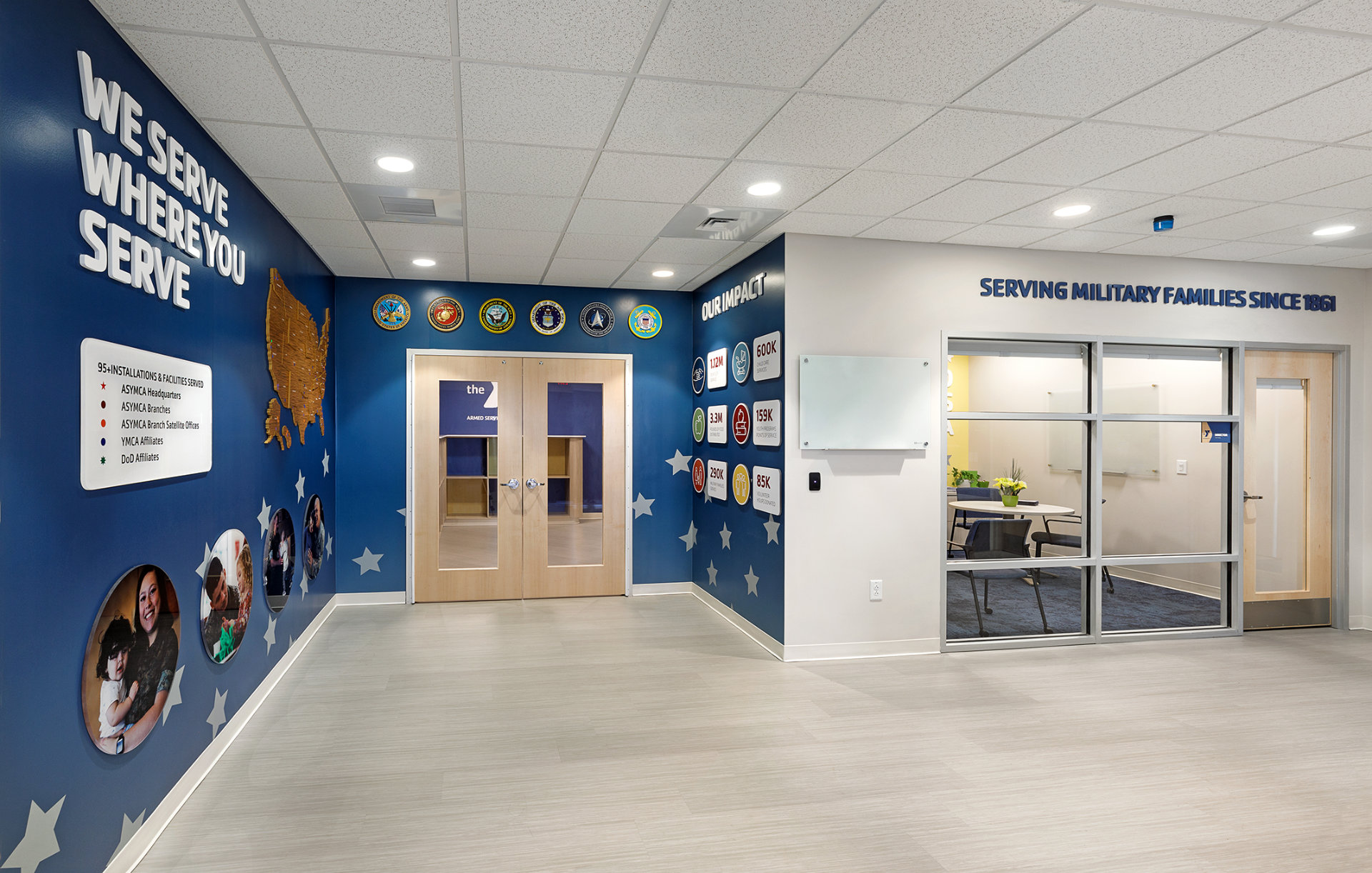
Through Mission Military Families, the Armed Services YMCA helps ease everyday life for military families navigating deployments, relocations, financial pressures, and the many uncertainties of military service.
For 165 years, the Armed Services YMCA has stood alongside military families with food assistance, affordable child care, youth programs, and opportunities for connection.
As we remember September 11th 25 years later, we can honor the past not only by keeping these stories alive, but by standing beside the military families carrying that legacy of service forward today.
, Blog Author Listing Grace OlinkiewiczResults
Grace is a military spouse originally from Long Island, New York, with a bachelor’s degree in English and a background in journalism. New to military life, she is navigating this transition firsthand as she begins her journey as a military spouse.