Why Veterans Day Matters to Me as a Military Spouse
Written by Grace Olinkiewicz
Veterans Day Through a Military Spouse’s Eyes
My perspective on Veterans Day has changed since marrying into a military family.
As a kid, the meaning of Veterans Day didn’t fully hit me until I sat down with my grandfather, who served in the Vietnam War, and heard his stories. Since then, Veterans Day has meant so much more to me.
And it means even more now that I’m married to a service member. I’ve seen firsthand the sacrifices made by those who serve — and their families. Each day, I get the opportunity to interact with our nation’s veterans and hear their stories.
I’ve learned the importance of giving thanks and why the person behind the uniform matters today and tomorrow. Whether someone is still serving or has put their cammies away, their service makes an impact.
Seeing the Person Behind the Uniform

The men and women behind the uniform aren’t just troops; they’re people. They’re someone’s child, someone’s parent, someone’s whole world.
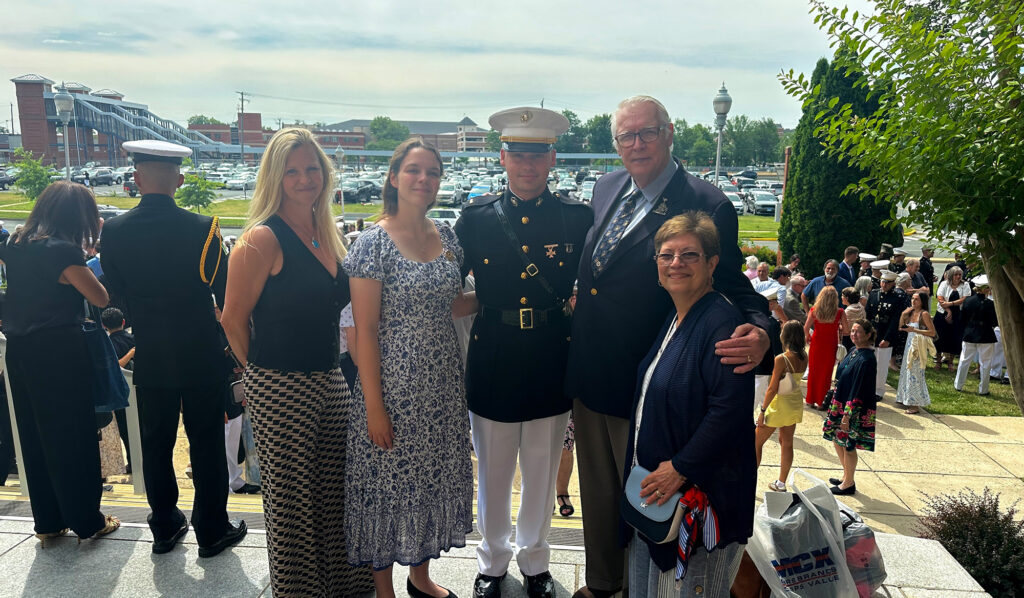
My grandfather is a Vietnam veteran who served in the Army, and my grandfather-in-law is a retired Marine Corps Sergeant Major. These men mean the world to me; their stories and experiences in and out of uniform have taught me more about life, love, and sacrifice than anything ever could.
And their service goes far beyond ceremonies and uniforms. My grandfather continues his service today by providing companionship and aid at a veterans’ home. My grandfather-in-law has dedicated his continued service to bettering the lives of those returning to civilian life and advocating for veterans’ mental health.
The Sacrifices Don’t End With Military Service
Veterans’ sacrifices don’t end with military service; they carry their experiences with them for the rest of their lives. Long after active duty ends, the physical, mental, and emotional impacts of service remain a permanent part of their daily lives — and the lives of their loved ones. From chronic health conditions to invisible and visible wounds, the struggle to transition back into the civilian world can be a lifelong challenge.
That impact extends to military families, too. Years of missed birthdays and lengthy deployments can create physical and emotional distance that lasts years after service. Military spouses struggle with unemployment, as constant relocations take a toll on careers, often with long-term impacts. Additionally, saying goodbye to established friends and nearby family with each move can make it challenging to feel supported, personally and professionally.
Many military veterans also experience a major identity shift as they reenter the civilian world. Leaving the heavily structured military environment, many veterans struggle with finding a new sense of community and identity.
Whether a veteran has been out of service one year or ten, their sacrifices haven’t ended — and should continue to be honored.
More Than Saying “Thank You for Your Service”
Recognition matters. It tells veterans that we hear and see them. This Veterans Day, go beyond a simple “Thank You” with these meaningful actions — because recognition and gratitude come in many forms.
1. Open-Ended Dialogue
Engage in a thoughtful conversation. Instead of just thanking a military veteran for their service, ask them about their story: what inspired them to join, where they served, and other open-ended questions that create meaningful dialogue. My husband and I enjoy speaking with the veterans we meet at our current duty station in Virginia (commissary cashiers, Exchange workers, or even other shoppers).
Military veterans are all around us, and it only takes a moment to say thank you — and to listen.
2. Educate and Engage
Education is another great way to recognize veterans. Visit a military museum, invite a veteran to speak at a school, or even engage in school projects on local veterans.
Years ago in grade school, I made a presentation for Veterans Day about my grandpa who served in the Army during the Vietnam War. Through talking to him and presenting his story, I developed a deeper understanding and appreciation for veteran sacrifice — and why younger generations must keep their memories alive.
3. Celebrate Your Local Military Community
Consider thanking our nation’s veterans by attending a local Veterans Day parade or ceremony. In my hometown, the fire department gathers our town’s veterans into modern and classic fire trucks and drives them around town for a parade. There’s always a marching band (usually from the local high school) and hundreds of people lining the street with flags and posters with ‘thank yous’ and messages of support.
Veterans Day activities can be fun and meaningful.
Honoring Veterans Through Continued Support

Support doesn’t have to stop there. Another way to support veterans and their families is to volunteer or donate to military support organizations like the Armed Services YMCA.
The Armed Services YMCA has supported military members and their families since the Civil War. Proudly serving today’s military and encouraging veteran camaraderie through events like the Hearts for Heroes Fishing Trip, the Armed Services YMCA is committed to being there every step of the way.
And with the Mission Military Families campaign, that legacy of support is expanding. Ensuring no family faces the hardships of military life alone, the Armed Services YMCA aims to bring financial relief, affordable childcare, and supportive programs to every base and installation across the United States.
Helping families navigate moves, deployments, and more, the Armed Services YMCA is honored to thank service families every day. You can help honor veterans and service members by supporting the Mission Military Families campaign today.
Because everyone who served deserves recognition and appreciation.
Veterans Day: A Reflection
This Veterans Day, reflect on the service and sacrifice of all who have worn the uniform. Thank them for their service — then take that gratitude one step further with meaningful action.
I’m grateful for my grandpa, my grandfather-in-law, my husband, and all military veterans. Your service will be remembered.
If you have served, thank you. We honor you today and every day.